
Smoke and Carbon Monoxide Alarm Checklist: Testing, Placement, and Replacement
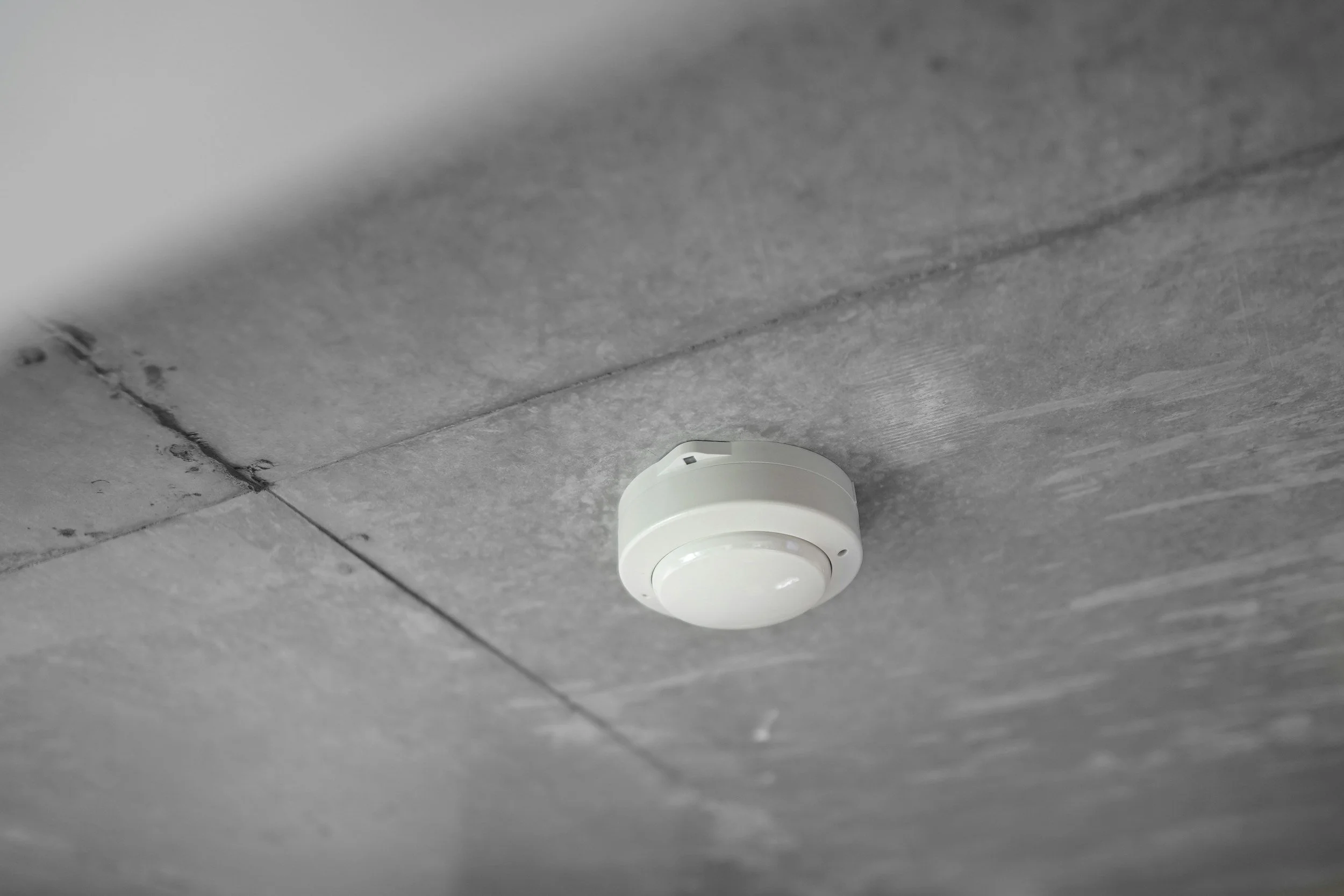
Smoke and carbon monoxide alarms serve different purposes. Smoke alarms warn of a possible fire, while carbon monoxide alarms detect dangerous levels of an invisible, odorless gas.
Both need correct placement, regular testing, and timely replacement. An alarm that has expired, lost power, or been installed in the wrong location may not provide the warning a household expects.
Use manufacturer instructions and current local building and fire codes when installing alarms. Requirements can differ based on the home’s layout, age, fuel-burning equipment, and jurisdiction.
Where to Place Smoke Alarms
The U.S. Fire Administration recommends installing smoke alarms:
Inside every bedroom
Outside each separate sleeping area
On every level of the home
In the basement
Near stairs leading to an upper level
Larger homes may need additional alarms to provide adequate coverage.
Install smoke alarms on the ceiling or high on a wall according to the manufacturer’s instructions. Avoid corners or other areas where airflow may prevent smoke from reaching the sensor promptly.
The U.S. Fire Administration also recommends placing smoke alarms at least 10 feet from cooking appliances when possible. This can reduce nuisance alarms without leaving the kitchen area unprotected.
Do not place a standard smoke alarm where steam, dust, or temperature conditions fall outside its approved range. Garages, unfinished attics, and areas immediately beside bathrooms may require a different location or type of detection device.
Where to Place Carbon Monoxide Alarms
The Consumer Product Safety Commission recommends CO alarms:
On every level of the home
Outside each separate sleeping area
In other locations required by local codes or manufacturer instructions
Homes with fuel-burning furnaces, water heaters, fireplaces, stoves, or attached garages can have potential carbon monoxide sources. All-electric homes may still face risks from an attached garage, portable generator, or equipment used nearby.
Do not place an ordinary CO alarm inside a garage unless the product is specifically approved for that environment. Temperature extremes, humidity, fumes, and dust may interfere with standard residential alarms.
The correct distance from fuel-burning appliances, cooking equipment, windows, vents, and bathrooms varies by product. Follow the instructions supplied with the alarm rather than relying on one universal measurement.
The CPSC provides additional placement and maintenance information in its official carbon monoxide alarm guidance.
Use Interconnected Alarms When Possible
Interconnected alarms communicate with one another. When one detects smoke or carbon monoxide, every connected alarm sounds.
This can provide earlier warning in:
Multistory homes
Large floor plans
Homes with closed bedroom doors
Finished basements
Areas far from sleeping rooms
Interconnection may be hardwired, wireless, or built into a compatible alarm system. Products must be designed to communicate with one another. Do not assume alarms from different brands or product families are compatible.
Only a qualified electrician should install or modify hardwired alarms. Hardwired units generally have backup batteries that still require inspection and maintenance.
Combination Alarms Can Simplify Coverage
Combination smoke and carbon monoxide alarms provide both types of detection in one unit. They can reduce the number of devices on walls and ceilings, but placement must satisfy the requirements for both functions.
Check that the model:
Has recognized safety certification
Is approved for the intended location
Uses a clear warning for each hazard
Includes battery backup when required
Can interconnect with other alarms if needed
Provides an end-of-life signal
Voice alerts can help occupants distinguish between a smoke warning and a carbon monoxide warning.
Test Every Alarm Monthly
Test smoke and CO alarms at least once a month. Press and hold the test button according to the product instructions until the alarm sounds.
Testing confirms that the power source, sounder, and basic electronics respond. It does not create actual smoke or carbon monoxide and may not evaluate every part of the sensor.
During the monthly check:
Test every alarm individually.
Confirm interconnected alarms all sound.
Make sure the alarm can be heard in each bedroom.
Check visual or vibrating alert devices.
Look for damage, paint, dust, or a loose mounting plate.
Confirm the alarm has not reached its replacement date.
Record the test date.
Never use a flame, vehicle exhaust, or another unsafe method to test an alarm.
Clean Alarms Without Damaging Them
Dust and insects can enter an alarm and contribute to poor performance or nuisance alerts.
Follow the manufacturer’s cleaning instructions. This may involve gently vacuuming around exterior openings with a soft brush attachment.
Do not:
Submerge an alarm
Spray cleaner or pesticide into it
Paint over it
Cover its openings
Disassemble the unit
Apply adhesives that block the sensor
Replace an alarm that has been painted, heavily contaminated, physically damaged, or exposed to conditions outside its rated limits.
Replace Batteries as Directed
Battery requirements depend on the alarm.
Replaceable-Battery Alarms
Replace batteries at least once a year or sooner if the alarm begins giving a low-battery warning. Use the battery type specified by the manufacturer.
Sealed Long-Life Alarms
Do not open or attempt to replace the battery in a sealed 10-year unit. Replace the entire alarm when it gives an end-of-life warning or reaches the manufacturer’s replacement date.
Hardwired Alarms
Hardwired alarms commonly include a backup battery. Test the unit monthly and replace the backup battery according to the manufacturer’s schedule.
Never remove a battery to silence a nuisance alarm and then leave the device disabled. Use the hush button when appropriate, ventilate the area, and correct the cause of repeated false alarms.
Replace Smoke Alarms After 10 Years
Smoke alarms do not last indefinitely. The U.S. Fire Administration recommends replacing residential smoke alarms 10 years after the date of manufacture.
To check the age:
Remove the alarm from its mounting plate.
Find the manufacture date on the back.
Add 10 years.
Replace the alarm if that date has passed.
Write the installation or replacement date where it can be seen later.
Replace it sooner if it fails a test, is damaged, repeatedly malfunctions, or has been recalled.
The U.S. Fire Administration’s smoke alarm guidance covers placement, testing, battery care, and replacement.
Check the CO Alarm’s Expiration Date
Carbon monoxide sensors also have limited service lives, but the replacement interval varies by model. Check the back of the alarm and the owner’s manual for:
Manufacture date
Replace-by date
Recommended service life
End-of-life warning pattern
Many CO alarms produce a specific chirp or display message when the sensor has expired. Replacing the battery will not correct an expired sensor; the entire unit must be replaced.
Do not assume that a combination alarm’s smoke and CO components share the same service life. Follow the replacement date printed on that product.
Know the Difference Between a Chirp and an Alarm
Alarm patterns vary by manufacturer. A periodic chirp may indicate a low battery, sensor fault, power problem, or end of service life. A repeating full alarm may indicate smoke or carbon monoxide.
Read the manual and keep it with household safety records. Many manufacturers also print warning patterns on the alarm.
Do not dismiss an unfamiliar sound. If there is any possibility of smoke or carbon monoxide, leave the home and contact emergency services from outside.
What to Do When an Alarm Sounds
For a smoke alarm:
Get everyone outside immediately.
Use the planned escape route.
Stay outside.
Call emergency services.
Do not return until firefighters say it is safe.
For a carbon monoxide alarm:
Move everyone into fresh air.
Call emergency services or the fire department.
Do not search for the source.
Do not reenter until qualified responders say it is safe.
Obtain medical attention when advised or when symptoms are present.
Possible carbon monoxide poisoning symptoms include headache, dizziness, nausea, weakness, confusion, chest pain, and shortness of breath. A functioning alarm does not replace proper maintenance of furnaces, chimneys, vents, generators, and other fuel-burning equipment.
Smoke and CO Alarm Checklist
Check the following at least twice a year in addition to monthly testing:
Smoke alarms are inside every bedroom.
Smoke alarms are outside each sleeping area.
Smoke alarms are on every level, including the basement.
CO alarms are on every level.
CO alarms are outside sleeping areas.
Alarms are securely mounted.
Every unit passes its monthly button test.
Interconnected alarms sound together.
Replaceable batteries are current.
Sealed units show no end-of-life warning.
Smoke alarms are less than 10 years old.
CO alarms are within their manufacturer’s service life.
Alarm openings are clean and unobstructed.
Everyone recognizes the warning sounds.
Household members know the escape plan and meeting place.
Alert devices meet the needs of people who are deaf or hard of hearing.
Local fire departments may offer alarm inspections, installation assistance, or free devices. Use the department’s nonemergency number to ask about programs in the area.
Working alarms are only one part of home safety, but they provide critical early warning. A short monthly test and a clear replacement record help ensure they are ready when needed.
